Stem Cell Therapy for Arthritis

Stem Cell Therapy for Arthritis

Your Joints Deserve to Heal - Not Just Cope. Stem Cell Therapy for Arthritis in Dubai Every morning that begins with stiff, aching joints is a quiet tax on your quality of life. Arthritis does not discriminate. It affects active professionals in their forties, retirees who simply want to walk without wincing, and athletes whose …
Your Joints Deserve to Heal - Not Just Cope. Stem Cell Therapy for Arthritis in Dubai

Every morning that begins with stiff, aching joints is a quiet tax on your quality of life. Arthritis does not discriminate. It affects active professionals in their forties, retirees who simply want to walk without wincing, and athletes whose bodies have given so much that the joints are now demanding something back.

For decades, patients faced a narrow set of choices: anti-inflammatory medications that manage symptoms without touching the cause, steroid injections that offer temporary relief, or surgery that comes with months of recovery and no guarantee. Today, a profoundly different path exists  and at Dynasty Clinic in Dubai, it is available to you right now.

Stem cell therapy for arthritis represents the frontier of regenerative medicine a scientific approach that works with your body rather than around it. By introducing concentrated, potent repair cells directly into damaged joints, this treatment doesn’t mask arthritis pain. It addresses the underlying biological breakdown causing it. Explore our full stem cells in Dubai programme to understand the complete spectrum of what this technology can do.

What Exactly Is Stem Cell Therapy for Arthritis?

Stem cells are the body’s master repair cells. They possess the remarkable ability to self-renew and differentiate meaning they can transform into the specific tissue types needed for repair, including cartilage, bone, tendon, and synovial tissue. In the context of arthritis, the primary cells used at Dynasty Clinic are mesenchymal stem cells (MSCs) — a category of adult stem cell found in bone marrow, adipose tissue, and Wharton’s jelly that has demonstrated consistent anti-inflammatory and cartilage-regenerating properties in peer-reviewed clinical research.

When injected precisely into an arthritic joint, MSCs do three critical things. First, they suppress the chronic inflammation that is destroying cartilage tissue. Second, they stimulate the production of new cartilage cells (chondrocytes) to replace those that have been lost. Third, they release signalling proteins called cytokines and growth factors that orchestrate the broader healing response in surrounding tissue. The result is not simply pain relief  it is measurable structural improvement in the joint itself.

How Does Stem Cell Treatment for Arthritis Differ from Conventional Options?

Traditional arthritis treatments focus almost entirely on symptom management. NSAIDs reduce inflammation temporarily but damage the gut lining with prolonged use. Corticosteroid injections can provide weeks or months of relief but progressively harm cartilage tissue with repeated administration. Knee replacement surgery or hip replacement surgery addresses severe end-stage degeneration but carries significant surgical risk, requires general anaesthesia, and demands 6–12 weeks of recovery. Stem cell therapy for arthritis operates at a fundamentally different level  addressing the root biological cause while preserving the joint and avoiding surgical intervention.

Which Types of Arthritis Respond to Stem Cell Treatment?

Dynasty Clinic’s orthopedic specialists in Dubai use stem cell injections for arthritis across a wide range of joint conditions and arthritic subtypes. Not every patient is an ideal candidate, but the breadth of conditions that respond to regenerative treatment is genuinely broad.

Osteoarthritis (OA)

The most common form of arthritis the gradual breakdown of cartilage in weight-bearing and frequently used joints. Osteoarthritis of the knee, hip, shoulder, ankle, and spine all respond well to stem cell therapy. Patients with Grade 1–3 OA typically see the strongest results. Our knee arthroscopy team works alongside our regenerative specialists to map each patient’s disease stage before recommending the most appropriate intervention.

Rheumatoid Arthritis (RA)

Rheumatoid arthritis is an autoimmune condition where the immune system attacks the joint lining. The powerful anti-inflammatory and immunomodulatory properties of mesenchymal stem cells make them particularly promising for RA. Clinical evidence indicates that MSC therapy reduces synovial inflammation, lowers pro-inflammatory cytokine levels, and slows the autoimmune cascade providing relief that goes well beyond what conventional RA medications can achieve alone.

Post-Traumatic and Sports-Related Arthritis

Athletes and physically active patients who develop arthritis following joint injuries from torn ligaments, meniscal damage, or repeated impact loading represent a growing patient group at Dynasty Clinic. These patients often develop arthritis younger, have higher functional demands, and are ideal candidates for stem cell injections because the underlying joint architecture is still partially intact. Our sports injury treatment specialists collaborate directly with the regenerative medicine team on these cases.

Ankylosing Spondylitis and Spinal Arthritis

For patients with inflammatory spinal arthritis or degenerative disc disease leading to arthritic changes, stem cell therapy combined with spine disc treatment protocols offers a comprehensive non-surgical approach to restoring spinal function and reducing chronic back pain.

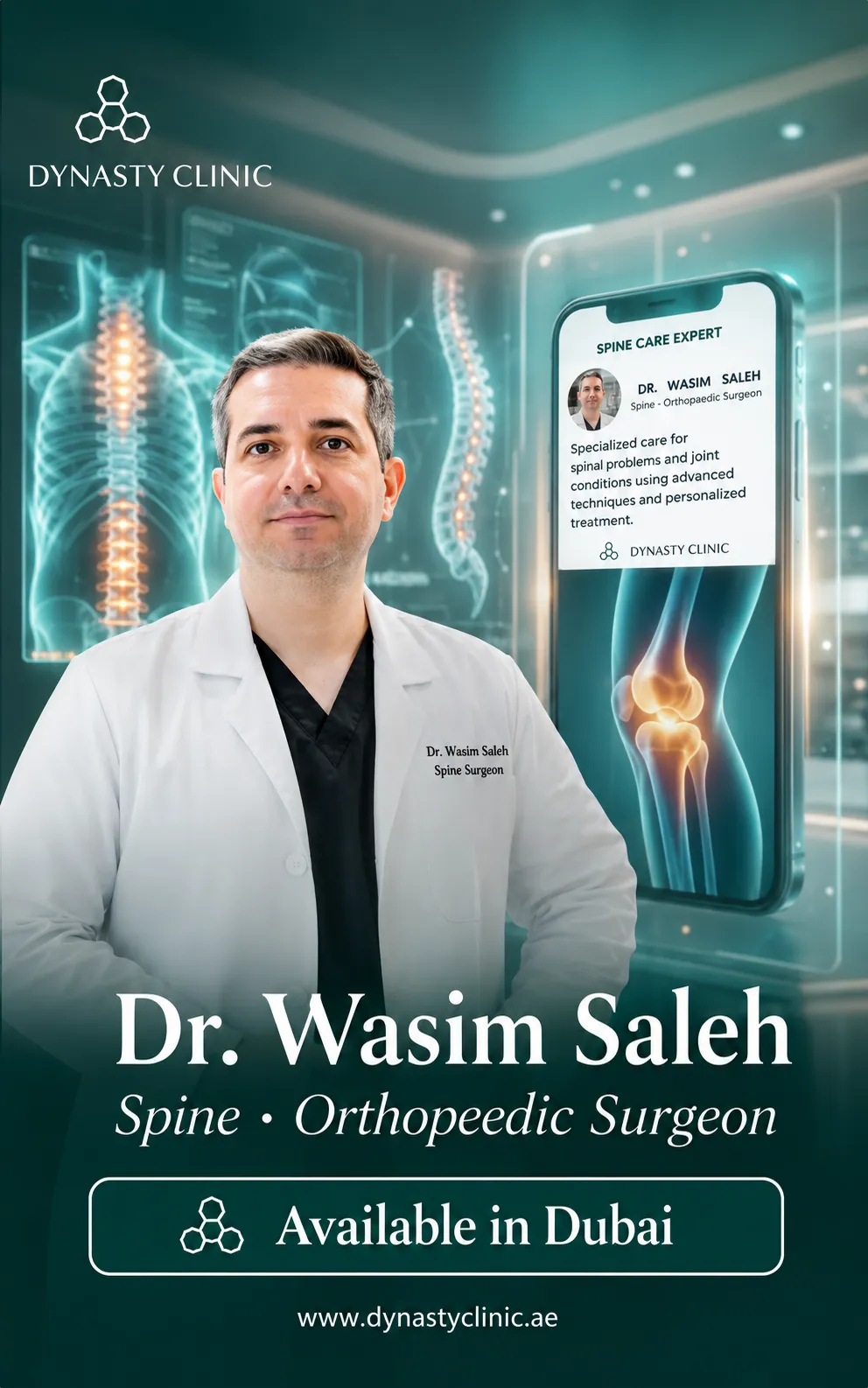
Dr. Wasim Zeyad Saleh

Dr. Wasim Zeyad Saleh - Stem Cell & Orthopedic Expert at Dynasty Clinic Dubai

  • Expert in regenerative joint treatments
  • Precision-based stem cell therapy approach
  • Precision-based stem cell therapy approach
  • Comprehensive orthopedic rehabilitation support
  • Trusted specialist for complex arthritis

Dr. Saleh brings extensive clinical experience in diagnosing and treating degenerative joint conditions, sports-related injuries, and complex arthritis cases across all major joints. His approach to stem cell treatment for arthritis is characterised by three principles: rigorous patient selection, precise cell delivery, and comprehensive post-treatment rehabilitation support.

How Does the Stem Cell Injection Process Work at Dynasty Clinic?

Dynasty Clinic follows a rigorous, evidence-based protocol for stem cell injections for arthritis. Every step — from initial consultation to follow-up assessment is managed by our specialist medical team under the highest clinical standards. Here is exactly what the process looks like:

  1. Comprehensive Assessment: Your first appointment involves a detailed joint evaluation — imaging review (MRI or X-ray), functional movement assessment, inflammation markers, and medical history. This determines your candidacy, the severity of arthritic involvement, and the most effective cell source and delivery method for your case.
  2. Cell Sourcing and Preparation: Depending on the protocol selected, stem cells are harvested from your own bone marrow (autologous BMAC), adipose tissue (fat-derived MSCs), or from a certified allogeneic source such as Wharton’s jelly. Cells are processed in our clinic’s dedicated preparation environment to concentrate therapeutic potency.
  3. Image-Guided Injection: Using ultrasound or fluoroscopic guidance, our physician delivers the concentrated stem cell preparation precisely into the target joint space. Accuracy of delivery is critical — imprecise injection dramatically reduces therapeutic effect. This is a procedure requiring specialist expertise, not a routine injection.
  4. Adjunct Therapies: In many protocols, stem cell treatment is combined with platelet-rich plasma (PRP) to enhance the growth factor environment, or with exosome injections to amplify cell-signalling activity within the joint.
  5. Recovery and Rehabilitation: Most patients resume light daily activity within 24–48 hours. A structured physiotherapy programme begins at approximately 2 weeks, supervised by our sport injury physiotherapy team. Full functional improvement typically emerges between 6 weeks and 6 months post-treatment.

What Does a Stem Cell Injection Session Feel Like?

The procedure itself is performed under local anaesthesia and is well-tolerated by the vast majority of patients. Most describe mild pressure at the injection site and occasional warmth in the joint during the first 24–48 hours. There is no general anaesthetic, no incision, and no hospital admission. Sessions typically take 45–90 minutes in total including preparation time.

Stem Cell Therapy vs. Surgery vs. Medication – Side-by-Side Comparison

Factor

Stem Cell Therapy

Joint Replacement Surgery

Long-term Medication

Mechanism

Regenerates tissue at cellular level

Replaces joint with prosthetic

Suppresses symptoms chemically

Anaesthesia

Local only

General / spinal

None

Recovery Time

24–48 hrs to light activity

6–12 weeks

Ongoing / immediate

Addresses Root Cause

Yes — repairs cartilage & reduces inflammation

Partially — removes damaged joint

No — symptom management only

Repeat Treatment

1–3 sessions typically

Single procedure

Indefinite daily use

Side Effect Profile

Very low — uses own biology

Infection, implant wear, DVT risk

GI damage, bone density loss (steroids)

Suitable For

Grade 1–3 OA, RA, post-traumatic arthritis

Grade 4 OA / severe structural damage

Mild–moderate symptom control

Long-term Benefit

Structural joint improvement

Pain relief with mechanical limitation

Diminishing response over time

Which Stem Cell Types Does Dynasty Clinic Use for Arthritis?

Not all stem cell preparations are equal. The type, source, concentration, and delivery method of the cells profoundly affect the clinical outcome. At Dynasty Clinic’s Dubai facility, our regenerative medicine team selects the optimal cell type for each individual patient’s arthritic profile. Beyond standard MSC preparations, we also offer advanced cell therapies including Muse Cells a highly potent stress-tolerant sub-population of mesenchymal stem cells with superior survival and differentiation properties.

Cell Type

Source

Best For

Availability

BMAC (Bone Marrow Aspirate)

Patient’s own bone marrow (iliac crest)

Knee OA, hip OA — autologous preference

Same-day procedure

Adipose-Derived MSCs

Patient’s fat tissue (mini-liposuction)

Widespread joint involvement, RA

Same-day procedure

Wharton’s Jelly MSCs

Certified donor umbilical cord

High-potency treatment, elderly patients

Ready to use

Muse Cells

Advanced pluripotent-like MSC source

Complex or resistant arthritis cases

Specialist protocol

PRP (Platelet-Rich Plasma)

Patient’s own blood

Add-on to boost growth factors in joint

Same-day procedure

Maximising Results Complementary Therapies at Dynasty Clinic

Stem cell therapy for arthritis achieves its greatest results when supported by a broader regenerative protocol. As part of Dynasty Clinic’s integrated approach to joint health, our patients benefit from access to a full spectrum of supportive therapies that amplify cellular repair, reduce systemic inflammation, and accelerate recovery.

Exosome Injections Amplifying the Healing Signal

Exosome injections are among the most exciting advances in regenerative joint medicine. Exosomes are extracellular vesicles released by stem cells that carry signalling molecules — proteins, lipids, and RNA — directly into target cells. When delivered alongside or after stem cell injections for arthritis, exosomes dramatically amplify the anti-inflammatory and regenerative signals within the joint environment.

NAD+ IV Therapy Cellular Energy for Recovery

Joint regeneration demands cellular energy. Our NAD+ IV therapy programme replenishes nicotinamide adenine dinucleotide — the coenzyme central to mitochondrial energy production and DNA repair providing the metabolic fuel that newly introduced stem cells need to survive, proliferate, and differentiate effectively within the joint.

EBOO Ozone Therapy Reducing Systemic Inflammation

Chronic arthritis involves systemic inflammatory pathways that extend beyond the affected joints. Our EBOO ozone therapy protocol addresses this systemic dimension, reducing circulating inflammatory mediators that would otherwise undermine the regenerative work happening at the joint level. For patients with rheumatoid arthritis in particular, this systemic anti-inflammatory approach adds a meaningful layer of therapeutic support.

Peptide Therapy Targeted Biological Signalling

Specific therapeutic peptides short amino acid chains that act as precise biological messengers can be used alongside stem cell treatment to enhance cartilage synthesis, reduce joint inflammation, and support tissue remodelling. Peptide therapy at Dynasty Clinic is prescribed by our functional medicine specialists as part of an individualised regenerative protocol tailored to each patient’s biochemistry and arthritic profile.

Physiotherapy Structural Rehabilitation

No regenerative treatment delivers its full potential in isolation. The newly restored joint tissue needs progressive, expert rehabilitation to develop functional strength, stability, and range of motion. Our physiotherapy team in Dubai designs individualised post-stem-cell protocols that support tissue integration, build supporting musculature, and gradually restore normal biomechanics turning biological repair into functional freedom.


Is Stem Cell Therapy for Arthritis Safe? What the Evidence Says

Patient safety is a legitimate and important concern when evaluating any evolving medical treatment. The honest answer is that stem cell injections for arthritis carry an exceptionally low risk profile when performed by qualified physicians using certified cell preparations in a regulated clinical environment which is precisely the standard maintained at Dynasty Clinic in Dubai.

Across a growing body of peer-reviewed clinical trials and systematic reviews, mesenchymal stem cell therapy for osteoarthritis and rheumatoid arthritis demonstrates:

  • Significant reductions in pain scores (VAS and WOMAC indices) sustained at 12-month follow-up
  • Measurable improvements in joint function and range of motion
  • MRI-confirmed cartilage repair in multiple controlled knee OA studies
  • A low adverse event profile the most common being transient injection-site discomfort
  • No recorded cases of tumour formation associated with MSC joint therapy in published clinical literature

Dynasty Clinic uses only DHA-compliant cell preparations sourced from certified laboratories. Every patient undergoes full pre-treatment screening, and all procedures are performed under sterile, image-guided conditions by licensed specialist physicians. Patients with active infections, certain blood disorders, or advanced joint destruction may not be suitable candidates  which is why the initial consultation and assessment are so critical.

What Results Can You Realistically Expect?

Clinical outcomes vary depending on the joint affected, arthritis grade, patient age, and the specific protocol used. However, patients who are good candidates for stem cell therapy for arthritis generally experience:

Outcome Measure

Typical Timeline

Expected Improvement

Pain reduction

4–8 weeks post-injection

50–80% reduction in pain scores (moderate OA)

Joint mobility

6–12 weeks

Measurable ROM improvement in most patients

Cartilage regeneration

3–6 months (MRI visible)

Partial to significant cartilage thickening

Functional activity

8–16 weeks

Return to normal daily function

Sports / high activity

4–6 months

Many athletes return to full training

Duration of benefit

12–36 months+

Repeat session available to maintain and extend

Are You a Candidate for Stem Cell Therapy for Arthritis in Dubai?

Dynasty Clinic assesses candidacy individually but the following patient profiles generally achieve the strongest results with stem cell treatment:

  • Ideal candidates: Patients with Grade 1–3 osteoarthritis who have not responded adequately to conservative treatments and want to avoid or delay surgery
  • Strong candidates: Patients with rheumatoid arthritis seeking anti-inflammatory regenerative support alongside their conventional RA management
  • Good candidates: Younger patients (under 65) with post-traumatic or sports-related arthritis with partially intact joint architecture
  • Consider carefully: Patients with Grade 4 end-stage OA surgery consultation is recommended alongside regenerative options (see knee replacement or hip replacement)
  • Not suitable: Active infection in or around the joint, active cancer, severe blood disorders, or poorly controlled systemic disease

The only accurate way to determine your candidacy is through a detailed consultation with our specialist team. Book your stem cell arthritis assessment at Dynasty Clinic today and receive a personalised clinical recommendation based on your specific diagnosis and imaging.

Success Stories

More than 250 five-star reviews on Google

Dynasty Clinic
have a question?

Quick answers to questions you may have

Most patients with moderate osteoarthritis require between 1 and 3 injection sessions, spaced 4–8 weeks apart, depending on the joint involved and the severity of arthritic damage. Rheumatoid arthritis protocols may involve additional sessions as part of an ongoing management plan. Your specialist at Dynasty Clinic will outline the recommended number of sessions during your initial assessment, with clear milestones and review points built into your plan.

Clinical data shows that the benefits of mesenchymal stem cell treatment for knee and hip osteoarthritis typically last between 12 and 36 months. Results vary based on arthritis grade, patient age, and adherence to post-treatment rehabilitation. Many patients at Dynasty Clinic opt for a maintenance session at the 18–24 month mark to sustain and extend their results.

The procedure itself is well-tolerated under local anaesthetic. Most patients describe mild pressure during the injection and some joint warmth in the 24–48 hours following treatment — a normal part of the healing response as the cells begin activating. Over-the-counter analgesics manage this effectively. Patients are advised to avoid strenuous activity for the first week and then progressively increase activity under physiotherapy guidance.

For patients with early-to-moderate osteoarthritis (Grade 1–3), stem cell therapy can absolutely delay or in many cases avoid the need for knee replacement surgery. For Grade 4 end-stage OA with severe structural destruction, surgery may still be the more appropriate primary intervention. However, many patients previously told they needed knee replacement have experienced such significant improvement from stem cell treatment that surgery has been deferred indefinitely. The key is accurate assessment which begins with your consultation with Dr. Wasim at Dynasty Clinic.