Chronic neck and back pain affects a huge share of adults at some point in their lives, and for many, standard treatments like painkillers, physiotherapy, or rest only go so far. Botox for back pain is a medically recognized, minimally invasive option that works by calming the overactive muscles and nerve signals responsible for chronic …
Chronic neck and back pain affects a huge share of adults at some point in their lives, and for many, standard treatments like painkillers, physiotherapy, or rest only go so far. Botox for back pain is a medically recognized, minimally invasive option that works by calming the overactive muscles and nerve signals responsible for chronic spasms and tension. Learn more about our Botox injections at Dynasty Clinic. Though best known for smoothing wrinkles, Botox has quietly built a strong clinical track record as a botox muscle spasm treatment for the spine, shoulders, and neck offering targeted relief for patients who haven’t found lasting results elsewhere. This guide breaks down how it works, what to expect from a botox injection for neck pain, and why more people in Dubai are turning to it as part of a comprehensive pain management plan at Dynasty Clinic.
Just How Common Is Neck and Back Pain?
Back pain ranks among the leading causes of disability worldwide. Neck pain isn’t far behind. Long desk hours, poor posture, screen time, old injuries, and daily wear and tear all keep muscles locked in tension. Over time, this tension does more than cause discomfort. It can trigger a cycle: pain leads to muscle spasm, spasm leads to more pain, and surrounding muscles start compensating. This often creates new problem areas.
For most people, the first line of treatment involves:
- Over-the-counter or prescription pain medication
- Physical therapy and stretching
- Heat, ice, or massage therapy
- Muscle relaxants
- In more severe cases, corticosteroid injections or surgery
These approaches help many patients, but not everyone. Pain medication sometimes just masks the problem. Physical therapy alone doesn’t always release deeply contracted muscles. And surgery can feel like an outsized step for a muscular issue. This is exactly the gap where Botox has quietly proven itself. Yet it remains one of the least discussed treatment options, largely because people still associate it primarily with cosmetic use.
Unveil Your Next Chapter With Dynasty
Our dedicated team is here to answer your questions and guide you on your path to well-being. Get in touch today to schedule a consultation or explore our services.
How Botox Works for Muscle Spasms and Chronic Pain
Botox is the brand name for botulinum toxin type A. It’s a purified protein that temporarily blocks the release of acetylcholine, the neurotransmitter that tells a muscle to contract. When injected into an overactive or spasming muscle, Botox interrupts this signal. The muscle relaxes.
Here’s why that matters for chronic pain specifically:
- It breaks the spasm-pain cycle. When a muscle gets injured or irritated, it often tightens as a protective response. That tightness becomes a new source of pain, which triggers further spasm. Botox interrupts this loop at the source.
- It targets the problem locally. Oral muscle relaxants and painkillers circulate through the entire body. Botox goes precisely into the muscles or trigger points causing the trouble. This reduces the risk of drowsiness, dependency, or systemic side effects.
- It has anti-nociceptive properties. Botox does more than relax muscle fibers. Research suggests it may also reduce the release of pain-signaling chemicals at the injection site.
- Effects build gradually and last for months. Most patients notice relief within a few days to two weeks. Results typically last three to six months per treatment cycle.
This mechanism is well established in clinical use. FDA-reviewed research confirms doctors have used Botox safely for decades to treat conditions like muscle spasticity, cervical dystonia, and chronic migraine, alongside its cosmetic applications. Explore our full range of Botox injections to see how we administer this treatment at Dynasty Clinic.
Benefits of Botox for Back Pain
Botox offers several distinct advantages for patients dealing with chronic lower or upper back pain rooted in muscle tension:
- Targeted, localized relief — injections go directly into the specific muscles or trigger points causing pain
- Non-surgical and minimally invasive — no incisions, general anesthesia, or extended recovery time
- Reduced reliance on oral medication — helpful for patients who want to avoid the sedation, GI side effects, or dependency risk that comes with long-term painkiller or muscle relaxant use
- Quick outpatient procedure — most sessions take well under an hour
- Complements physical therapy — by relaxing tight muscles, Botox can make stretching and rehab exercises more effective and less painful
- Well-tolerated by most patients — side effects stay generally mild and localized to the injection site
Doctors typically consider Botox for chronic low back pain linked to muscle spasm, myofascial pain syndrome, or paravertebral muscle spasms. It works best when trigger points are clearly identified, and especially when physical therapy and medication haven’t provided lasting relief.
Botox Injection for Neck Pain: A Closer Look
Neck pain has its own set of common culprits. Tech neck from constant phone and laptop use, whiplash from old injuries, tension headaches, and cervical muscle spasm all rank among the most frequent. A botox injection for neck pain works on the same principle as back treatment. Precise injections into muscles like the trapezius, levator scapulae, or splenius capitis relax the overactive fibers responsible for stiffness and pain.
Patients commonly seek Botox for neck pain when they experience:
- Chronic muscle tightness or stiffness that doesn’t resolve with stretching or massage
- Tension-type headaches or migraines that originate in the neck and shoulders
- Cervical dystonia (involuntary neck muscle contractions)
- Pain following whiplash or repetitive strain injuries
- Trigger points that refer pain into the shoulders, upper back, or head
The neck houses many small, closely positioned muscles, so precision matters. An experienced injector maps out the exact trigger points before treatment. This ensures the toxin goes only where it’s needed.
What to Expect: The Botox Procedure for Neck and Back Pain
A Botox session for muscle spasm and pain relief is a straightforward, in-clinic procedure. Here’s a general overview of what patients can expect:
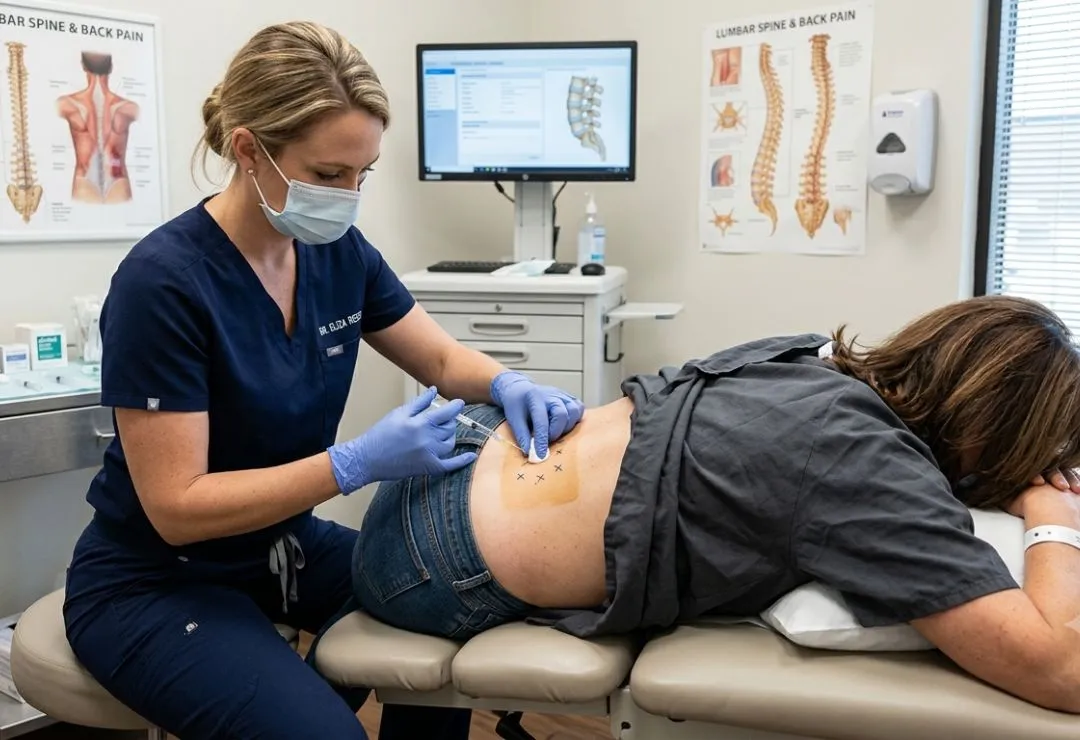
- Consultation and assessment. The treating doctor evaluates your pain history and examines the affected area. They identify specific trigger points or muscle groups, sometimes with the help of imaging or manual palpation.
- Marking the injection sites. The doctor marks the identified areas to ensure accuracy.
- Injection. Using a fine needle, the doctor injects small amounts of Botox directly into the targeted muscles. The process itself takes only a few minutes. Most patients tolerate it well with minimal discomfort.
- Recovery. There’s little to no downtime. Most patients resume normal activities the same day. It’s generally best to avoid strenuous exercise or massaging the treated area for 24 hours.
- Onset and duration. Relief usually begins within a few days to two weeks. It can last three to six months, depending on the individual and the severity of the underlying muscle issue.
Results are temporary, so doctors typically administer Botox for back and neck pain as part of an ongoing management plan. Many patients pair it with physiotherapy to help retrain the muscles and extend the benefits between sessions.
Potential Side Effects and Safety Considerations
Botox has a long safety record when a trained medical professional administers it. But like any injectable treatment, it carries some potential side effects, including:
- Temporary redness, swelling, or bruising at the injection site
- Mild soreness or muscle weakness near the treated area
- Headache or flu-like symptoms in the days following treatment
- Rarely, temporary weakness in nearby muscles if the toxin spreads slightly beyond the target area
Serious complications stay uncommon when an experienced practitioner uses appropriate dosing and injection technique. Botox also isn’t suitable for everyone. Patients who are pregnant or breastfeeding, have certain neuromuscular disorders, or take specific medications should discuss alternatives with their doctor. A thorough consultation beforehand remains the best way to determine candidacy and minimize risk.
Common Misconceptions About Botox for Pain
Because people strongly associate Botox with cosmetic treatments, several misconceptions tend to follow it into the pain management conversation:
- Botox is only for wrinkles. Doctors have actually used Botox medically since the late 1980s. It treats conditions ranging from eye spasms and cervical dystonia to chronic migraines, excessive sweating, and increasingly, chronic muscle-related pain.
- It’s a permanent fix. Botox isn’t a cure. It manages symptoms by relaxing overactive muscles for a limited period. That’s why it works best as part of a broader treatment plan that may include physiotherapy and lifestyle adjustments.
- It will make my muscles weak everywhere. Botox goes in small, precise amounts directly into targeted muscles. Its effects stay localized rather than causing widespread weakness.
- It’s not backed by real medical evidence. Some applications still need more large-scale trials. But reputable pain clinics and hospital spine programs internationally already use Botox for muscle spasm and myofascial pain, often for patients who haven’t responded to first-line treatments.

Cost Considerations
The cost of Botox for back or neck pain varies. It depends on the number of injection sites, the dosage required, and the complexity of the case. Cosmetic Botox differs from medical Botox for chronic pain, which insurance may partially cover in some cases, particularly when there’s a documented history of failed conservative treatment. Coverage varies significantly by provider and policy, though. Treatment isn’t one-size-fits-all. The most accurate way to understand pricing is through an in-person consultation, where the treating doctor can assess your specific pain pattern and outline a tailored treatment plan and cost estimate.
Why Is Botox for Back Pain Still Underused?
Given the evidence behind it, it’s fair to ask why doctors don’t offer Botox for back and neck pain more widely as a first-line option. A few factors explain the gap:
- Cosmetic association. Decades of marketing have cemented Botox in the public mind as a wrinkle treatment. Many patients simply don’t know it has legitimate pain-management applications.
- Limited awareness among referring doctors. Not every general practitioner or physiotherapist knows about Botox’s use for musculoskeletal pain. It often doesn’t come up as an option until a patient reaches a specialist.
- Perception of cost or complexity. Some patients assume medical Botox costs too much or only exists at highly specialized clinics. In fact, many aesthetic and physiotherapy-focused clinics, including Dynasty Clinic, are well equipped to offer it.
- It requires a skilled injector. Effective pain relief depends heavily on correctly identifying trigger points and muscle groups. Results can vary based on the practitioner’s experience, which reinforces the importance of choosing a clinic with genuine expertise in both aesthetics and musculoskeletal treatment.
As awareness grows and clinical experience accumulates, Botox is steadily gaining recognition. It’s becoming a legitimate, evidence-informed option for chronic muscle-related pain, not just a cosmetic afterthought.
Is Botox for Back or Neck Pain Right for You?
Botox tends to work best when pain clearly links to muscle spasm, tension, or identifiable trigger points, rather than pain caused primarily by structural issues like disc herniation or nerve compression. It often works best for patients who have already tried physical therapy, medication, or other conservative treatments without lasting relief, and who want a non-surgical option to break the spasm-pain cycle.
A proper clinical assessment remains the best way to find out if you’re a good candidate. A qualified doctor will review your pain history, examine your muscles and posture, and help you understand whether Botox, alone or alongside physiotherapy, fits into your overall treatment plan.

Consider Botox for Neck and Back Pain at Dynasty Clinic, Dubai
Dynasty Clinic sits on Umm Al Sheif Road in Al Safa, Dubai. Our team brings together expertise in physiotherapy, orthopedic care, and aesthetic medicine. This combination positions us well to offer Botox as part of a genuinely comprehensive approach to chronic neck and back pain. If you’ve been living with persistent muscle tension or spasm-related pain that hasn’t responded to other treatments, it may be worth exploring whether Botox could help.
Our team will assess your specific pain pattern, walk you through what to expect, and build a treatment plan suited to your needs, whether that’s Botox alone or paired with physiotherapy for longer-lasting results.
Ready to explore your options?
Visit our Botox injections service page to learn more, or contact Dynasty Clinic in Dubai today to book a consultation and find out whether Botox for back pain or neck pain is the right next step for you.
Book an Appointment
It’s easy and free!