Peptide research has grown fast over the past few years, and the BPC-157 vs TB-500 comparison comes up again and again. Both peptides appear frequently in preclinical studies on tissue repair, and both are popular subjects in regenerative medicine research. But they are not the same compound, and they do not work through the same …
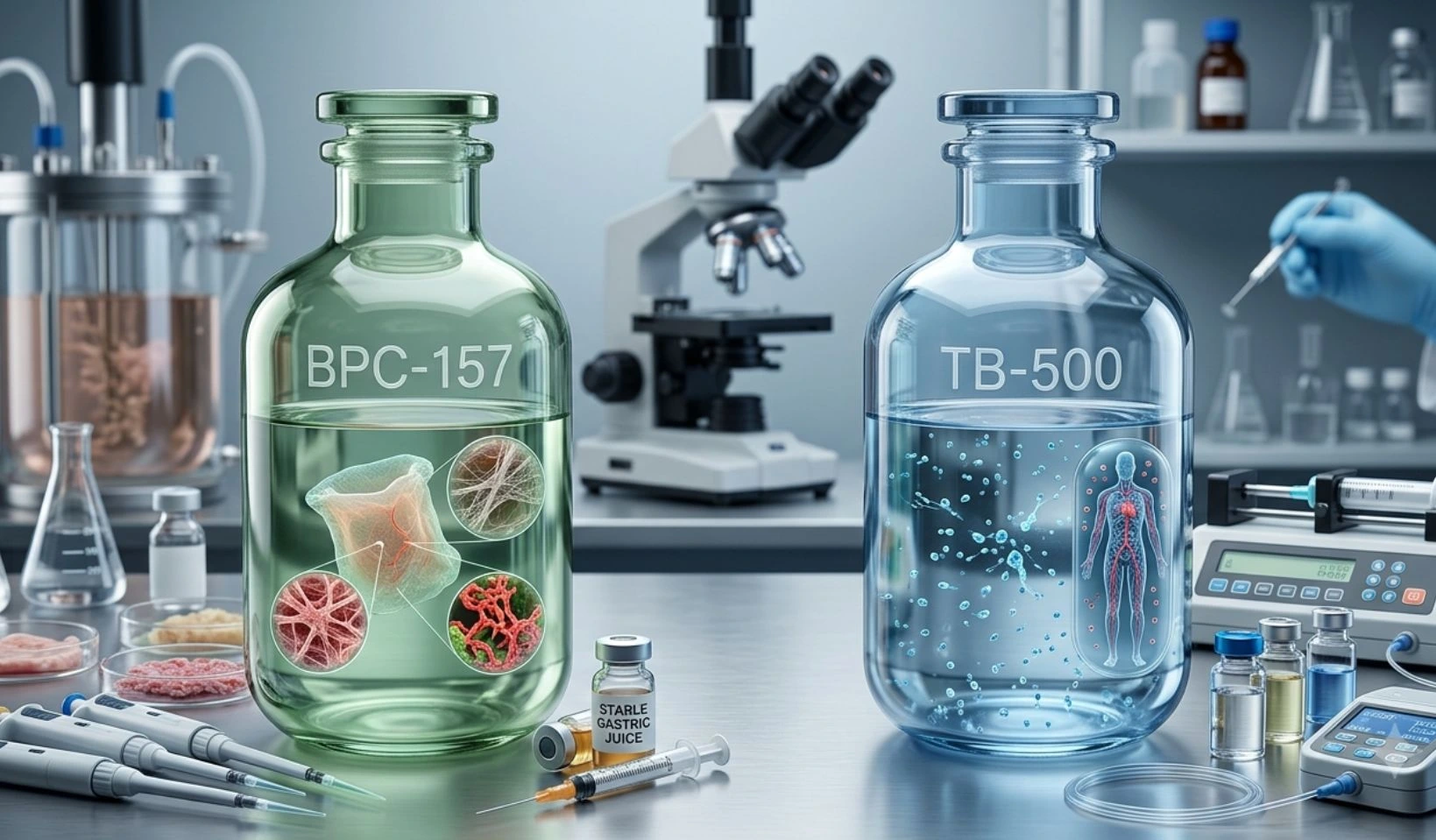
Peptide research has grown fast over the past few years, and the BPC-157 vs TB-500 comparison comes up again and again. Both peptides appear frequently in preclinical studies on tissue repair, and both are popular subjects in regenerative medicine research. But they are not the same compound, and they do not work through the same biological pathway.
This guide breaks down what the current research says about BPC-157 and TB-500, how their mechanisms differ, and where each one shows the most research interest. All information below is intended for educational and research reference only.
What Is BPC-157?
BPC-157 (Body Protection Compound-157) is a synthetic pentadecapeptide derived from a protective protein found in gastric juice. Researchers first identified it while studying how the stomach lining protects itself from injury and ulceration.
In laboratory models, BPC-157 has been studied for its role in:
- Soft tissue healing, including tendons, ligaments, and muscle
- Gastrointestinal protection and mucosal regeneration
- Angiogenesis, or new blood vessel formation
- Anti-inflammatory signaling pathways
- Neural tissue recovery
One notable trait researchers highlight is its localized action. In animal studies, BPC-157 tends to concentrate its effects near the site of application, which makes it a frequent subject in research on tendon and ligament repair models.
Unveil Your Next Chapter With Dynasty
Our dedicated team is here to answer your questions and guide you on your path to well-being. Get in touch today to schedule a consultation or explore our services.
What Is TB-500?
TB-500 is a synthetic fragment of Thymosin Beta-4 (Tβ4), a peptide that occurs naturally in nearly every human and animal cell. Unlike BPC-157, TB-500 works primarily through actin regulation. Actin is a structural protein that drives cell movement, and TB-500 binds to actin monomers in a way that supports cell migration into damaged tissue.
Research applications for TB-500 include:
- Skeletal muscle fiber regeneration
- Chemotaxis of myoblasts, the precursor cells involved in muscle repair
- Systemic anti-inflammatory modulation
- Wound healing across skin and connective tissue
Because TB-500 circulates systemically after administration, preclinical models suggest it can reach multiple injury sites at once rather than acting only where it is applied.
Key Differences Between BPC-157 and TB-500
| Factor | BPC-157 | TB-500 |
|---|---|---|
| Origin | Derived from a gastric protective protein | Synthetic fragment of Thymosin Beta-4 |
| Primary mechanism | Growth factor modulation, angiogenesis | Actin binding, cell migration |
| Site of action | Localized to the application area | Systemic, reaches multiple sites |
| Strongest research base | Tendon, ligament, and GI tissue models | Skeletal muscle regeneration models |
| Bioavailability in studies | Effective both subcutaneously and orally in animal models | Typically studied via subcutaneous administration |
Which One Has Stronger Research Support?
Preclinical studies point to different strengths for each peptide. BPC-157 has a broader and longer research history in tendon, ligament, and bone healing models, including studies where it performed comparably to bone grafting in delayed bone healing. Its influence on gastrointestinal tissue also remains one of the most studied applications in the BPC family.
TB-500, on the other hand, shows a more concentrated research focus on skeletal muscle. Studies using murine models report increased Tβ4 expression during muscle injury and regeneration, with the peptide promoting the migration of muscle satellite cells to the injury site.
Because the two peptides act through different pathways, researchers often study them together. The combination of BPC-157 and TB-500 is an active area of interest in regenerative peptide research, with scientists examining whether localized and systemic mechanisms produce complementary effects.
Research Status and Compliance Note
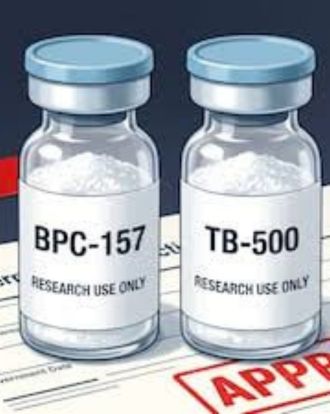
Neither BPC-157 nor TB-500 is approved for human therapeutic use. Both remain classified as research compounds, and all published data comes from preclinical and animal studies rather than human clinical trials. At Dynasty Clinic, information about these peptides is shared strictly for educational and research reference, in line with our commitment to compliant, non-medical peptide content.
Explore Research Peptides at Dynasty Clinic
Dynasty Clinic supplies high-purity, lab-synthesized peptides for research purposes, including BPC-157 10mg and TB-500 (frag 17-23) 10mg. Both are supplied as sterile lyophilized powder for laboratory use only. To learn more about our full peptide research range, visit our Peptide Therapy page.

Frequently Asked Questions
Is BPC-157 or TB-500 better for tendon injuries?
Research models most often associate BPC-157 with tendon and ligament healing, given its established role in localized tissue repair studies.
Is TB-500 better for muscle injuries?
Preclinical research on skeletal muscle regeneration favors TB-500, largely due to its actin-binding mechanism and systemic reach.
Can BPC-157 and TB-500 be studied together?
Yes. Many researchers combine the two peptides to examine whether localized and systemic healing pathways work in a complementary way.
Are these peptides approved for human use?
No. Both BPC-157 and TB-500 remain research-stage compounds without approval for therapeutic use in humans.
Book an Appointment
It’s easy and free!