Hijama is a powerful prophetic healing practice. Islamic tradition recommends it for overall health and wellness. Today, many women are rediscovering the Sunnah points of Hijama. Specifically, they use it for hormonal balance, pain relief, fertility support, stress reduction, and chronic fatigue.Do you struggle with painful periods, lower back pain, hormonal imbalance, or daily stress? …
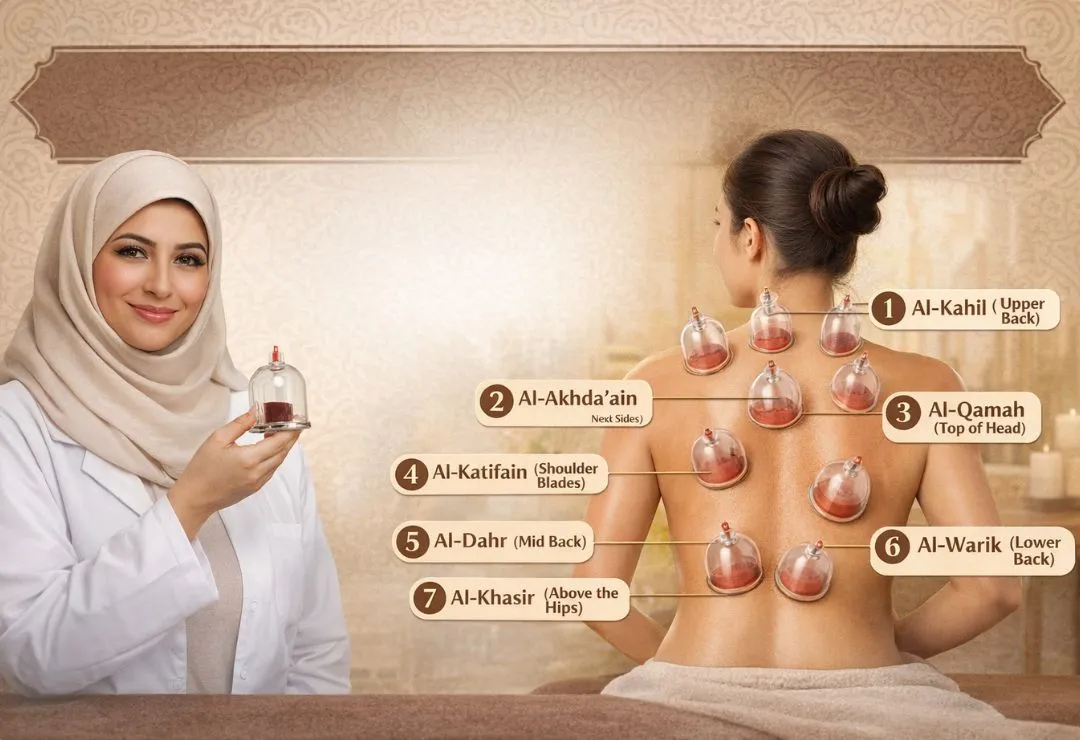
Hijama is a powerful prophetic healing practice. Islamic tradition recommends it for overall health and wellness. Today, many women are rediscovering the Sunnah points of Hijama. Specifically, they use it for hormonal balance, pain relief, fertility support, stress reduction, and chronic fatigue.
Do you struggle with painful periods, lower back pain, hormonal imbalance, or daily stress? If so, Hijama on the correct Sunnah points can support natural healing and restore balance to your body. In this guide, we explore the 7 most important Sunnah points of Hijama for ladies. Along the way, we cover their locations, benefits, and role in prophetic medicine.
What Is Hijama?
Hijama is an ancient Islamic healing practice. First, therapists place cups on specific skin points to create suction. This draws stagnant, toxic blood to the surface. Next, they make small, precise incisions and remove the impure blood. As a result, this cleanses the body at a cellular level and stimulates fresh, oxygenated blood in its place.
Why Is Hijama Especially Powerful for Women?
For women, Hijama offers a drug-free, holistic alternative to pharmaceuticals. It comes rooted entirely in Prophetic tradition. In fact, Umm Salama (R.A.), wife of the Prophet (peace be upon him), received Hijama with his direct blessing. Sahih Muslim (5708) records this event. So this therapy is not only permissible for women — it’s actively encouraged.
Unveil Your Next Chapter With Dynasty
Our dedicated team is here to answer your questions and guide you on your path to well-being. Get in touch today to schedule a consultation or explore our services.
The 7 Sunnah Points at a Glance
Location: Top center of the head Hadith: The Prophet (peace be upon him) received cupping on his head. (Sahih al-Bukhari, 5699)
Classical Islamic texts call Al-Yafookh the mother of diseases. That’s because toxic blood builds up at this point and affects brain function, sensory organs, and immunity. So cleansing here starts healing throughout the entire body.
For women, this point directly targets hormonal migraines, post-pregnancy hair thinning, brain fog, and mood disorders. Additionally, it addresses sinusitis, vertigo, tinnitus, poor concentration, acne, anxiety, and insomnia. Many women link brain fog to thyroid disorders or perimenopause. As a result, they often report clearer thinking after sessions here.
Points 2 and 3: Al-Akhda’ain – Back of the Neck
Location: Below the hairline, on both sides of the cervical spine Hadith: The Messenger (peace be upon him) received cupping three times, on the two jugular veins and the base of the neck. (Sunan Abi Dawud, 3860)
Poor posture, stress, and sitting too much can slow blood flow from the brain. As a result, toxic blood builds up in the neck and head. Consequently, this triggers high blood pressure, headaches, neck stiffness, and cognitive fog.
For women, this point holds special value for thyroid health. After all, the thyroid controls metabolism, energy, weight, hair growth, and reproductive hormones. Cupping here improves circulation through the entire neck area. Therefore, it helps women with hypothyroidism, hyperthyroidism, and Hashimoto’s thyroiditis. Furthermore, it eases chronic neck pain, facial pain, shoulder tension, sinusitis, and high blood pressure.
Point 4: Al-Kahil – Between the Shoulder Blades
Location: Upper back, between the shoulder blades at T3 to T6 vertebrae Hadith: Angel Jibreel (A.S.) advised the Prophet (peace be upon him) to perform Hijama at Al-Kahil. (Ibn Majah)
Al-Kahil serves as the cornerstone of all Hijama therapy. In fact, Islamic medical narrations state this one point can address up to 72 diseases. Why? Because this upper-back region connects major lymphatic pathways, the thoracic duct, the sympathetic nervous system, and spinal nerve roots. Together, these serve nearly every organ in the body.
For women, this point targets anaemia and iron-deficiency fatigue. Specifically, it does this by boosting fresh red blood cell production. Moreover, it eases upper back and shoulder pain, supports breathing conditions like asthma, and helps clear skin conditions linked to blood toxicity, such as eczema and psoriasis.
Points 5 and 6: Al-Waraq – The Waist Points
Location: Right and left sides of the lower back, level with the navel Primary focus: Female reproductive, kidney, and digestive health
Al-Waraq stands out as the most women-specific Sunnah point in Hijama. These two points sit directly over the ovaries, uterus, kidneys, adrenal glands, and large intestine. Together, they form the command centre of female reproductive and metabolic health.
For PCOS, Hijama here can lower androgen levels and help regulate the menstrual cycle. Similarly, for painful periods, it clears pelvic blood stagnation and eases inflammation. In fact, many Dynasty Clinic patients say monthly Hijama at Al-Waraq has fully replaced their need for painkillers.
For fertility challenges and perimenopausal symptoms, cupping here improves pelvic blood flow and helps balance hormones. Beyond that, it also supports kidney health, digestion, and lower back pain, and it can ease sciatica, bloating, and fluid retention.
Point 7: Al-Akhmasin – Behind the Knees
Location: Back crease of both knees Primary focus: Circulation, joint health, lower-body detox
The back of the knee is a major hub for blood and lymph flow. So this point especially helps women who stand for long hours or deal with leg heaviness. Additionally, it supports women with varicose veins linked to hormonal changes during pregnancy and the menstrual cycle.
Among its benefits, this point eases knee arthritis, varicose veins, swelling, and tight hamstrings. It can also ease sciatica that radiates down the legs and improve poor blood flow in the lower body. In addition, it stimulates lymph drainage from the entire lower body, which reduces the chronic swelling and heaviness many women link to hormonal shifts.
Bonus Point: Al-Qadam - Top of the Foot
Location: Top surface of either foot Hadith: While in Ihram, the Prophet (peace be upon him) received cupping on the top of his foot due to pain. (Sunan Abi Dawud)
Al-Qadam works as a powerful, whole-body detox point. Namely, it stimulates lymph drainage, boosts the immune system, and supports the nervous system. For women, it addresses leg weakness, gout, arthritis, plantar fasciitis, chronic ankle swelling, and full-body toxin clearance.
When Is the Best Time for Ladies to Get Hijama?
The most blessed days for Hijama fall on the 17th, 19th, and 21st of the Islamic Hijri lunar month. Ideally, Monday, Tuesday, or Thursday work best. For ladies, avoid Hijama during the first five days of your period.
Instead, aim for days 7 to 14 of your cycle. During this window, your body sits in its most receptive and regenerative phase. Above all, always tell your therapist about your full medical history, medications, and pregnancy status before your session.
What to Expect During Your Session at Dynasty Clinic
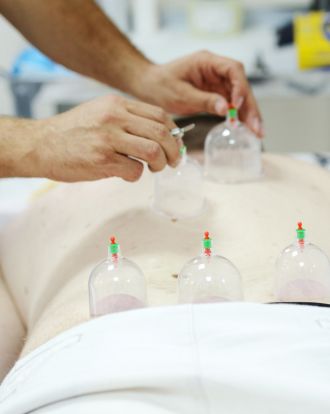
In Dynasty Clinic Dubai, certified female Hijama therapists begin with a health consultation to identify the right Sunnah points for your needs. Dry cupping is applied first to boost blood flow, followed by tiny sterile incisions using a single-use lancet. Wet cupping cups are then reapplied for 5–10 minutes. The area is cleaned, treated with black seed oil, and dressed. Sessions usually take 45–90 minutes, and mild bruising typically fades within 3–7 days.
Book Your Session at Dynasty Clinic Dubai
The Sunnah points of Hijama for ladies come Prophetly endorsed. Indeed, they stand as 1,400-year-tested doorways to healing. The Prophet Muhammad (peace be upon him) said: “Indeed the best of remedies you have is Hijama.” (Sahih al-Bukhari, 5371)
Whether you manage PCOS, a thyroid disorder, fertility challenges, or chronic pain or simply want to detox and rebalance Hijama at the correct Sunnah points offers a natural path to the wellness you deserve.
So, book your personalised Hijama consultation today at dynastyclinic.ae. Our certified female therapists work seven days a week, with same-week appointments across Dubai.
Frequently Asked Questions
FAQ 1: How many Sunnah points of Hijama are there?
There are 9 Sunnah points documented in authentic Hadiths where the Prophet (peace be upon him) personally received cupping or directed others to receive it. These include Al-Yafookh, Al-Akhda’ain (2 points), Al-Kahil, Al-Waraq (2 points), Al-Akhmasin (2 points), and Al-Qadam. For ladies, the waist points carry the most specific importance for reproductive health.
FAQ 2: Which point is best for period pain and PCOS?
Al-Waraq, the bilateral waist points on the lower back parallel to the navel, are the primary Sunnah points for female reproductive health. They directly stimulate blood flow to the ovaries, uterus, and kidneys. Combined with Al-Kahil on the upper back, the hormonal regulatory benefits are comprehensive and long-lasting.
FAQ 3: Is Hijama halal and safe for women?
Yes. Hijama is absolutely halal for women and endorsed directly by the Sunnah. Umm Salama (R.A.) received Hijama with the Prophet’s blessing (Sahih Muslim, 5708). At Dynasty Clinic Dubai, all female patients are treated exclusively by certified female therapists in a fully private and Islamic-modest setting.
FAQ 4: How often should ladies get Hijama?
For general health maintenance, once every one to three months aligned with the blessed lunar days is ideal. For specific conditions such as PCOS, hormonal imbalance, or fertility support, a programme of three to six sessions spaced three to four weeks apart is recommended. Your Dynasty Clinic specialist will design a personalised plan for your individual needs.
FAQ 5: What should ladies do before and after a session?
Before: Fast for three to four hours, avoid heavy food the previous day, and wear loose comfortable clothing. After: Rest for the day, drink plenty of water, consume honey and black seed, avoid cold water and swimming for 24 hours, avoid seafood and dairy for 24 hours, and keep cup sites clean and dry until healed within three to five days.
Book an Appointment
It’s easy and free!