Botox and microneedling both target fine lines, but they work in completely different ways one relaxes the muscle, the other rebuilds the skin. Here’s how to tell which one your lines actually need, and when combining both makes sense.
Fine lines rarely show up one at a time. A faint crease near the eyes, a soft line across the forehead, a slight loosening around the mouth and suddenly you’re standing in front of the mirror wondering which treatment actually makes sense. When it comes to fine lines, the Botox vs microneedling debate comes up more than any other.
They’re often mentioned together, but they don’t do the same job. One relaxes the muscles that cause certain lines to form. The other encourages your skin to rebuild its own structure from the inside out. Understanding that difference is the key to choosing the right treatment or realizing you might benefit from both.
This guide breaks down how each treatment works, where each one shines, what recovery actually looks like, and how to decide which is the better fit for your skin, your goals, and your lifestyle.
Fine lines rarely show up one at a time. A faint crease near the eyes, a soft line across the forehead, a slight loosening around the mouth and suddenly you’re standing in front of the mirror wondering which treatment actually makes sense for you. Two names come up more than any other in that conversation: Botox and microneedling.
They’re often mentioned in the same breath, but they don’t do the same job. One works by relaxing the muscles that cause certain lines to form. The other works by encouraging your skin to rebuild its own structure from the inside out. Understanding that difference is the key to choosing the right treatment or realizing you might benefit from both.
This guide breaks down how each treatment works, where each one shines, what recovery actually looks like, and how to decide which is the better fit for your skin, your goals, and your lifestyle.
Why Fine Lines Form in the First Place
Before comparing treatments, it helps to understand that not all fine lines have the same cause which is exactly why one single treatment doesn’t work for every line on the face.
Some lines are the result of repeated muscle movement. Every time you frown, squint, or raise your eyebrows, the skin above that muscle folds along the same crease. Do that thousands of times over the years, and the crease starts to linger even after your face relaxes. These are dynamic wrinkles, and they’re a mechanical problem the muscle is doing the same motion it’s always done, but the skin’s ability to bounce back has changed.
Other lines are the result of structural changes within the skin itself. Collagen and elastin the proteins that keep skin firm and bouncy naturally decline with age, sun exposure, and lifestyle factors. As that support structure thins out, skin loses its ability to spring back into place, and fine lines appear even when your face is completely at rest. These are static wrinkles, and they’re a materials problem the skin’s underlying framework has weakened.
This distinction is the entire reason Botox and microneedling exist as two separate categories of treatment rather than competing versions of the same thing. One addresses the mechanical cause. The other addresses the structural one. And for a lot of people, their face has some of both.
Unveil Your Next Chapter With Dynasty
Our dedicated team is here to answer your questions and guide you on your path to well-being. Get in touch today to schedule a consultation or explore our services.
What Botox Does
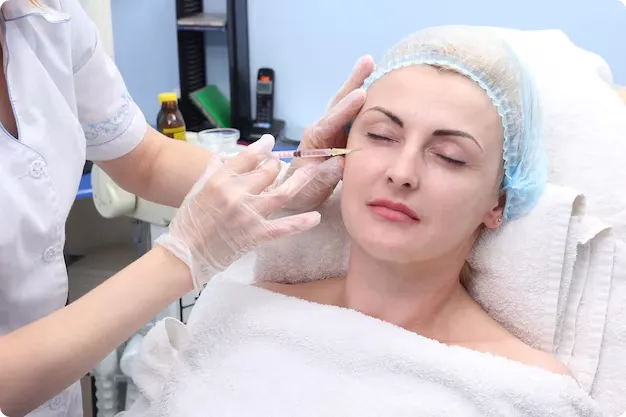
Botox works by temporarily relaxing the specific facial muscles responsible for dynamic wrinkles, so the skin above them stops creasing with each expression. It’s best suited to lines that only appear when you move your face — forehead lines, frown lines, crow’s feet. For the full mechanism, treatment areas, and candidacy details, see our Botox Injections page. What matters for this comparison: Botox is fast (10–20 minutes, results in 3–7 days, lasting 3–4 months), has minimal downtime, and does not add volume or improve skin texture it only addresses muscle movement.
If your main concern is volume loss rather than muscle movement, our Botox vs. dermal fillers comparison covers which one actually addresses that.
What Is Microneedling and How Does It Work?
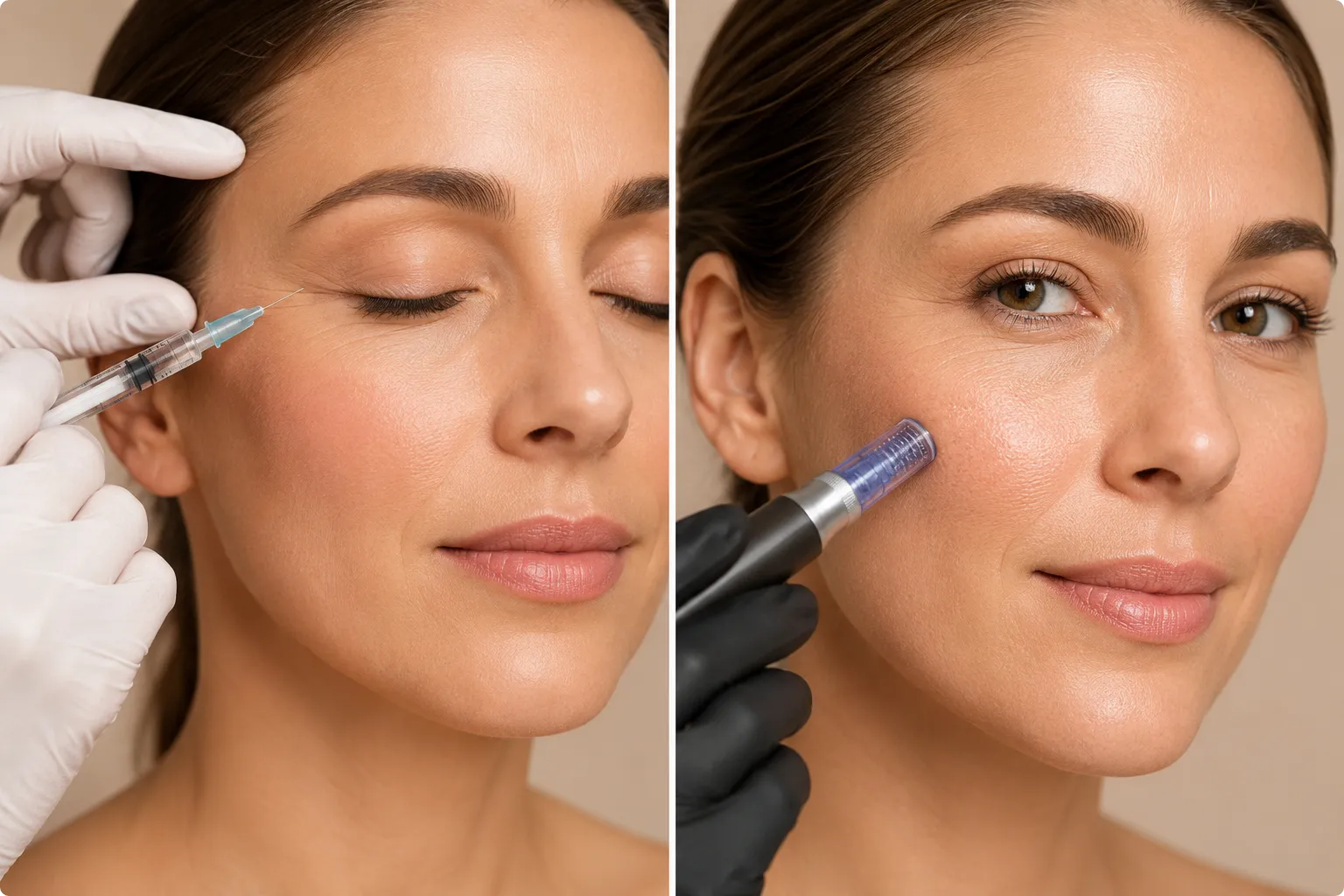
Microneedling takes a completely different approach. Instead of relaxing muscles, it creates hundreds of microscopic, controlled punctures in the skin using a device fitted with fine needles. Your skin reads this as an injury and responds the way it always does by producing more collagen and elastin to repair itself.
This process, called collagen induction therapy, is what makes microneedling effective for a different category of concerns: static wrinkles visible even at rest along with:
- Fine lines caused by thinning, aging skin
- Enlarged pores
- Mild acne scarring
- Uneven skin texture and tone
- Early signs of skin laxity
- Fine lines caused by thinning, aging skin
- Enlarged pores
- Mild acne scarring
- Uneven skin texture and tone
- Early signs of skin laxity
A single microneedling session usually takes 30 to 60 minutes, and unlike Botox, results build gradually. You won’t see dramatic change the next day collagen remodeling takes weeks, and most people need a series of 3 to 6 sessions spaced about four weeks apart to see meaningful improvement. Downtime is also more noticeable: expect redness and slight puffiness for 24 to 72 hours, similar to a mild sunburn.
Many clinics now offer radiofrequency (RF) microneedling, which combines the micro-injury of traditional needling with heat energy to stimulate even more collagen production often with faster, more visible results for fine lines and mild skin laxity. Dynasty Clinic covers RF microneedling as one of several options on our non-surgical skin tightening treatments page, alongside a broader look at how to get tighter, firmer skin in Dubai without surgery.
Botox vs. Microneedling: The Core Difference
Botox | Microneedling | |
|---|---|---|
How it works | Relaxes muscles to stop expression lines from forming | Stimulates collagen production to rebuild skin structure |
Best for | Dynamic wrinkles (forehead lines, frown lines, crow’s feet) | Static wrinkles, texture, pores, mild scarring |
Results appear | 3–7 days | Gradually, over weeks, after a series of sessions |
How long it lasts | 3–4 months | 6–12 months, longer with maintenance |
Downtime | Minimal — possible slight redness or bruising | 24–72 hours of redness, mild swelling |
Sessions needed | One session per treatment cycle | Typically 3–6 sessions in a series |
Treats muscle movement | Yes | No |
Improves skin texture/tone | No | Yes |
Adds volume | No | Indirectly, over time, via new collagen |
Which One Should You Choose? It Depends on the Lines You Have
Choose Botox if:
- Your lines only appear when you frown, squint, or raise your eyebrows
- You want fast, predictable results with minimal downtime
- Your main concern is the forehead, between the brows, or crow’s feet
- You want a quick treatment you can fit into a lunch break
Choose Microneedling if:
- Your lines are visible even when your face is at rest
- You’re also dealing with texture issues, enlarged pores, or mild scarring
- You’d rather improve the skin’s underlying structure than temporarily relax muscles
- You’re comfortable committing to a series of sessions for gradual, longer-lasting results
Consider combining both if:
- You have dynamic lines in some areas and static lines or texture concerns in others
- You want a more comprehensive, layered approach to aging skin
This last point is worth dwelling on, because in practice, it’s often the most common recommendation from experienced practitioners.
Can You Combine Botox and Microneedling?
Yes and for many people, this combination delivers more complete results than either treatment alone. Because Botox and microneedling target different causes of aging (muscle movement vs. collagen loss), they don’t compete with each other; they complement each other.
A common approach is to have Botox address dynamic lines around the forehead and eyes, while microneedling is used to improve overall texture, fine lines at rest, and skin quality across the face. Some clinics also offer microneedling with PRP (platelet-rich plasma) or PRF (platelet-rich fibrin) as an added step to accelerate collagen stimulation even further you can read more about how this works in our guide to the benefits of PRF for facial rejuvenation, or explore our Dermapen with Exosome Therapy, which pairs microneedling with regenerative exosomes for deeper results.
Timing matters when you’re combining treatments. Most practitioners recommend spacing Botox and microneedling sessions about two weeks apart, in either order, to avoid the swelling from microneedling affecting Botox placement or vice versa. Your provider will map out a schedule based on your specific skin and goals.
Downtime and Recovery: What to Actually Expect
One of the most common questions is which treatment interrupts your routine more. Here’s the honest answer:
After Botox:
- You can usually return to normal activities immediately
- Avoid lying down or exercising vigorously for a few hours
- Avoid rubbing the treated area for 24 hours
- Any redness or small bumps at injection sites typically fade within hours
After microneedling:
- Expect visible redness for 24 to 48 hours, sometimes up to 72
- Skin may feel tight or mildly sensitive, similar to sunburn
- Avoid makeup for at least 24 hours to reduce infection risk
- Sun protection is essential during recovery, as new skin is more sensitive to UV exposure
An upcoming event, photoshoot, or important occasion can make this timing difference alone tip the decision. Botox is far more forgiving of a tight schedule; microneedling needs a few quiet days built in.
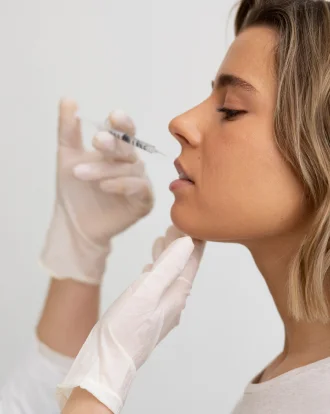
For people looking for a Botox alternative, microneedling can be an excellent choice, especially if they prefer to avoid neuromodulators or if their fine lines are caused by reduced collagen and changes in skin texture rather than repeated facial expressions. Microneedling stimulates the skin’s natural healing process, encouraging new collagen and elastin production to create smoother, firmer-looking skin over time.
- Prefer a non-injectable treatment for facial rejuvenation.
- Want to improve skin texture and overall skin quality.
- Have fine lines caused by collagen loss rather than muscle movement.
Who Should Avoid Each Treatment?
Both treatments are generally well-tolerated, but they’re not right for everyone.
Botox may not be suitable if you:
- Are pregnant or breastfeeding
- Have certain neuromuscular conditions
- Have an active infection at the injection site
- Are allergic to any component of the formulation
Microneedling may not be suitable if you:
- Have active acne, eczema, or psoriasis in the treatment area
- Have a history of keloid scarring
- Are currently using certain acne medications (such as isotretinoin)
- Have an active skin infection
A licensed provider will review your medical history during a consultation to confirm which treatment or combination is appropriate for you.

Frequently Asked Questions
Is microneedling as effective as Botox for wrinkles?
It depends on the type of wrinkle. For dynamic lines caused by muscle movement, Botox tends to deliver faster, more targeted results. For static lines and overall skin texture, microneedling often provides more comprehensive, longer-term improvement.
Which lasts longer, Botox or microneedling?
Botox typically lasts three to four months per session. Microneedling results build gradually and can last six to twelve months or longer with a proper treatment series and ongoing maintenance.
Can I get microneedling and Botox on the same day?
Most practitioners recommend spacing the two treatments about two weeks apart rather than doing them in the same session, to allow each treatment to work without interference.
Does microneedling hurt more than Botox?
Microneedling sessions are typically longer and involve more sensation across a broader treatment area, though topical numbing cream is commonly used to minimize discomfort. Botox involves brief, targeted injections and is generally quicker with less overall sensation.
Which is better for under-eye fine lines?
This area is delicate, and the right choice depends on whether the lines are from muscle movement (crow’s feet when smiling) or from thinning skin at rest. A consultation can determine which or whether a combination approach is best for this specific area.
How many sessions of microneedling will I actually need?
Most treatment plans involve three to six sessions spaced about four weeks apart, though your provider may recommend more or fewer depending on your skin’s condition and your goals. Maintenance sessions every few months can help sustain results afterward.
Book an Appointment
It’s easy and free!