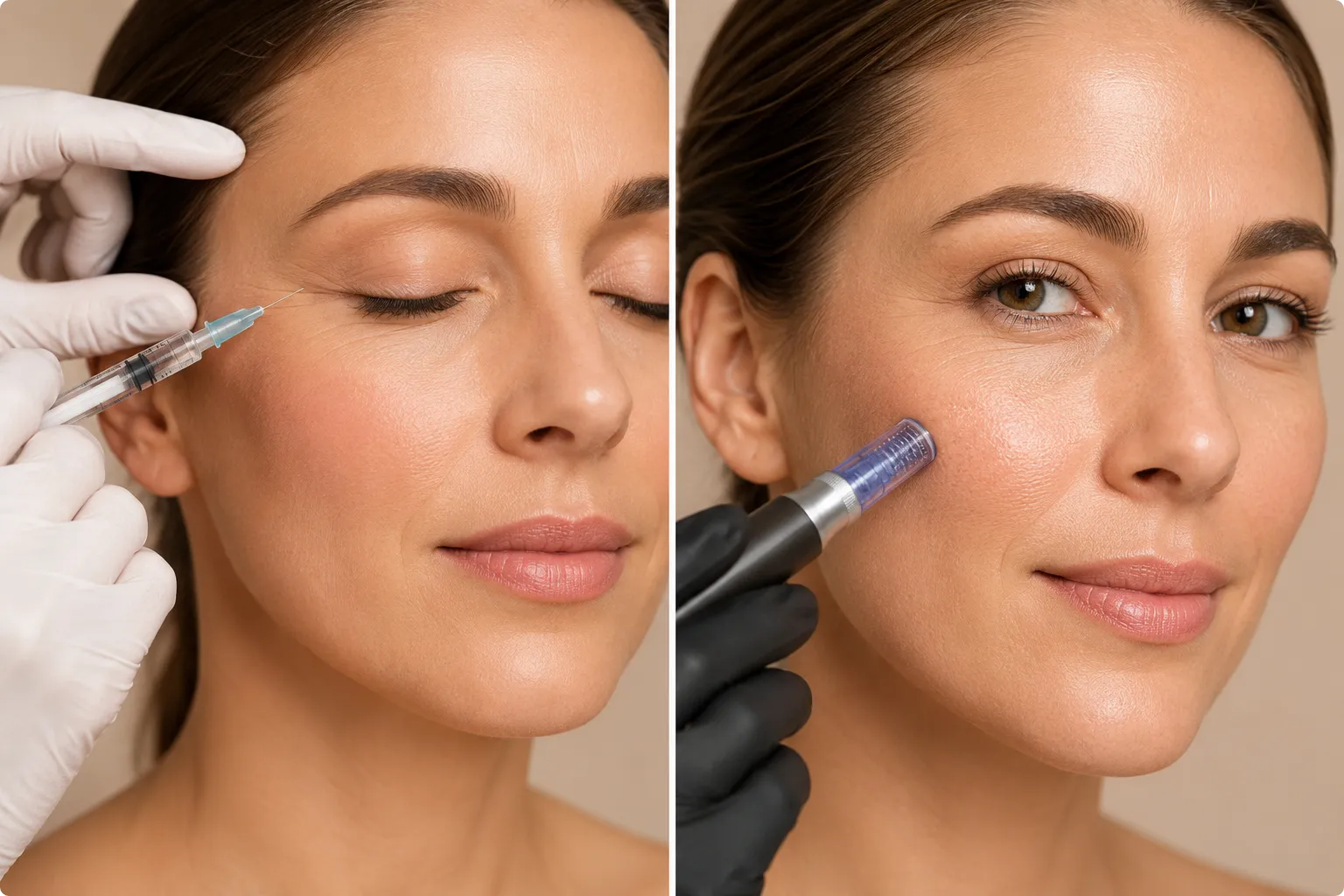
Curious about preventative Botox in your 20s or 30s? Learn what the research says, who’s a good candidate, and what to expect at Dynasty Clinic.
Preventative Botox has become one of the most talked-about cosmetic treatments among younger adults. More people in their 20s and early 30s are choosing Botox before wrinkles become visible, hoping to keep their skin looking smoother for longer. While this trend has gained popularity on social media, the decision should be based on more than what’s popular. The important question is whether preventive Botox is effective and whether it is the right choice for your skin, goals, and facial anatomy. Botox Injections at Dynasty Clinic.
Why Preventative Botox Has Become So Popular
Preventative Botox has become more common because attitudes toward cosmetic treatments have changed. What was once considered a private decision is now openly discussed on social media, making treatments like Botox more familiar and accessible. At the same time, skincare has shifted from correcting visible signs of aging to preventing them. Many younger adults already prioritize sunscreen, medical-grade skincare, and healthy lifestyle habits, and some see Botox as another step in maintaining youthful-looking skin.
Several factors have contributed to the growing popularity of preventive Botox, including:
- Greater awareness of cosmetic treatments through social media and online education.
- A stronger focus on preventing fine lines rather than treating deep wrinkles.
- Increased interest in long-term skin maintenance among people in their 20s and early 30s.
- Advances in cosmetic medicine that allow for subtle, natural-looking results.
- Better understanding that treatment plans should be personalized rather than based on age alone.
Although starting Botox earlier may benefit some patients, it is not the right choice for everyone. The decision should always be based on your facial anatomy, muscle movement, skin condition, and aesthetic goals. During a consultation, Dr. Sima carefully evaluates these factors to determine whether preventive Botox is appropriate or if other treatments may better suit your needs.
Unveil Your Next Chapter With Dynasty
Our dedicated team is here to answer your questions and guide you on your path to well-being. Get in touch today to schedule a consultation or explore our services.
How Does Preventative Botox Work?
Preventive Botox uses the same medication and injection technique as traditional Botox. The main difference is when the treatment begins. Instead of softening wrinkles that are already visible, preventive Botox is designed to reduce the repeated facial muscle movements that can eventually create permanent lines. Common expressions such as smiling, frowning, squinting, and raising your eyebrows cause the skin to fold repeatedly over time. As the skin naturally loses collagen and elasticity, these repeated movements can leave lasting wrinkles.
Preventive Botox works by gently relaxing selected facial muscles before deep lines have the chance to develop. The goal is not to freeze facial expressions but to reduce excessive muscle activity while maintaining a natural appearance.
The areas most commonly treated include:
- Forehead lines caused by raising the eyebrows.
- Frown lines between the eyebrows, often called the “11 lines.”
- Crow’s feet around the outer corners of the eyes that appear when smiling or squinting.
Because younger patients usually have few or no visible wrinkles, preventive Botox typically requires smaller doses than treatments performed later in life. Dr. Sima carefully assesses your facial movements and muscle strength to create a personalized treatment plan that delivers subtle, balanced results while preserving natural facial expressions.
Does the Research Actually Support This?
The honest answer is that the evidence is promising but still developing. A 2023 evidence-based review published in the Journal of Cosmetic Dermatology looked at both clinical data and real-world practice patterns for Botox use in younger adults. It found that wrinkle prevention, not correction, was the leading reason patients under 35 sought treatment, and that practitioners were already adjusting their approach for this age group by using lower doses than they would for older patients.
The review also noted a genuine gap in the research: there isn’t yet a large body of long-term data proving that starting earlier prevents wrinkles from forming later. What is well established is that Botox is effective at softening the dynamic wrinkles it targets, and that dosing for younger, toxin-naive patients should look different from dosing for someone in their late 40s or 50s.
In plain terms: preventative Botox has real logic behind it and growing clinical support, but it isn’t a guarantee against aging. Genetics, sun exposure, skincare habits, and lifestyle all still play a role in how your skin ages.
Common Myths About Starting Early
Myth: Once You Start, You Have to Continue Forever
This is one of the most persistent misconceptions. Botox is not habit-forming, and your muscles do not become dependent on it. If you stop treatment, your muscle movement gradually returns to how it was before, over the same three-to-six-month window the effects normally last.
Myth: Starting Young Means You’ll Look Frozen
A frozen, over-treated appearance is almost always a result of dosing, not age. Younger patients are typically treated with fewer units specifically to avoid this look, and a good specialist will always prioritize natural movement over a dramatic change, especially for a first-time patient.
Myth: It Guarantees You’ll Never Get Wrinkles
Botox only affects the muscles it’s injected into. It cannot address skin laxity, sun damage, volume loss, or pigmentation, all of which also contribute to how a face ages. Preventative Botox is one tool among several, not a substitute for sunscreen, skincare, or a healthy lifestyle.
Myth: It’s Only for Celebrities and Influencers
Botox has become significantly more accessible in recent years, and the average patient today is far more likely to be a working professional than a public figure. The rise in younger patients reflects a broader shift in who considers cosmetic treatment normal, not a trend limited to public personalities.
Who Tends to Be a Good Candidate in Their 20s or 30s
- Already notice fine lines forming when they frown, squint, or raise their eyebrows, even if the lines disappear when the face relaxes
- Have a strong family history of deep expression lines appearing early
- Use certain facial muscles frequently, whether from expressive habits or job-related strain
Who Should Hold Off
It’s worth waiting, if you:
- Have no visible dynamic wrinkles at all, even when making expressions
- Are mainly influenced by trends or social media rather than a specific concern
- Are pregnant, breastfeeding, or have a neuromuscular condition
- Haven’t had a proper consultation to discuss realistic expectations
A good consultation should never feel like a sales pitch toward starting early. It should help you understand whether your specific skin and muscle patterns would actually benefit from it now, or whether you’d see the same results by simply starting a few years later.

What Makes Early Botox Different from Later Treatment
Lower Doses
Younger, first-time patients typically need fewer units than older patients with deeper, more established wrinkles. Lower doses also help preserve natural movement and expression, which matters more to younger patients who are often more sensitive to looking frozen.
A More Conservative Approach
For a first treatment, most specialists start conservatively and adjust in future sessions based on how your muscles respond. This is especially true for younger patients, since it’s easier to add more Botox at a follow-up appointment than to correct a result that went too far.
Longer Intervals Between Sessions
Because younger skin and muscles typically need less correction, some patients in their 20s and 30s find they can go longer between sessions compared to older patients maintaining more established lines.
Aftercare for First-Time Patients
Recovery from Botox is minimal, but a few simple habits in the first 24 to 48 hours help your results settle properly, especially for a first treatment when you’re still learning how your body responds.
- Avoid lying flat or rubbing the treated area for at least four hours, since pressure can shift the product before it fully sets.
- Skip intense exercise for the rest of the day to avoid increasing blood flow to the area.
- Stay out of saunas, steam rooms, and direct sun for 24 hours.
- Avoid alcohol the evening of treatment, as it can increase the likelihood of mild bruising.
- Give it the full two weeks before judging your results. Botox continues to settle over that period, and going back too early for a touch-up can lead to over-treatment.
Mild redness or small bumps at the injection sites are normal and typically resolve within a few hours. Bruising is possible but not common, and your specialist can advise on ways to minimize it before your appointment if you’re prone to bruising easily.
Cost Considerations for Preventative Botox
Botox is priced per unit rather than as a flat fee, and the number of units used depends on the muscles treated and the strength of your movement, not simply your age. Because first-time and younger patients are typically treated with a lighter, more conservative dose, an initial preventative session often costs less than a treatment plan designed to correct deeper, more established lines.
It’s worth thinking about preventative Botox as an ongoing, ongoing-if-you-choose expense rather than a one-time purchase. If you continue treatment, you’ll typically return every three to six months as the effects wear off. Some younger patients find that with consistent, low-dose treatment over time, they’re able to stretch the interval between sessions, though this varies from person to person and isn’t guaranteed.
The Long-Term Outlook: What Happens If You Stop
One of the most common questions from first-time, younger patients is what happens if they start Botox and later decide to stop, whether for a few months or permanently. The answer is straightforward: your muscles gradually regain their normal range of motion as the product wears off, generally over three to six months. Your face does not “catch up” on the wrinkles it would have developed in the meantime, nor does stopping cause any rebound effect. You simply return to how your skin and muscles were behaving before treatment, plus whatever natural aging happened during that window.
This is worth knowing upfront because it removes a lot of the pressure around the decision. Trying Botox in your 20s or 30s isn’t an irreversible commitment. If it doesn’t feel right for you, or your circumstances change, you can simply stop, and there’s no medical downside to doing so.
Questions Worth Asking at Your Consultation
A good first consultation should leave you with clear answers, not just a booking confirmation. Consider asking your specialist:
- Do my facial muscles and movement patterns actually suggest I’d benefit from starting now?
- How many units would you recommend for a first treatment, and why?
- What product will be used, and is it FDA-approved for cosmetic use?
- What should I expect to see, and by when?
- If I’m not happy with the subtlety or strength of the result, what happens at my follow-up?
A specialist who takes time to answer these thoroughly, rather than moving straight to treatment, is generally a good sign that your goals are being taken seriously rather than treated as a quick sale.
What to Expect at Your First Appointment
A first-time Botox consultation at Dynasty Clinic starts with a conversation, not a needle. Your specialist will look at your facial movement, ask about your concerns and goals, and review your medical history.
- Consultation: your practitioner examines your facial muscles at rest and in motion, and discusses realistic outcomes for your age and skin.
- Treatment: the injections themselves take about ten to twenty minutes, with no anesthesia required.
- Results: initial changes appear within three to seven days, with full results visible by around two weeks.
- Follow-up: your specialist will typically want to see how you’ve responded before planning your next session.
For a full walkthrough of the treatment itself, see our Botox Injections page.
Botox Isn’t Your Only Option
If you’re not sure Botox is the right first step, it isn’t the only way to address early signs of aging. A solid skincare routine, sun protection, and treatments like skin boosters or light resurfacing can also support skin health in your 20s and 30s. If you’re weighing Botox against dermal fillers specifically, our Botox vs. Dermal Fillers comparison breaks down how each one works and when each tends to make more sense.
A Personalized Approach Matters More Than Your Age
Dynasty Clinic takes a personalized approach to Botox treatment. Our specialists assess your facial anatomy, muscle movement, and aesthetic goals rather than relying on age alone. Dr. Sima Sarabi leads non-surgical facial rejuvenation and adjusts the treatment approach for each patient. This includes younger patients who are considering Botox for the first time.
Preventative Botox may suit some people, but the decision depends on individual factors. Your muscle patterns, treatment goals, and personal comfort all matter. The American Academy of Dermatology also recommends discussing cosmetic treatments with a board-certified dermatologist to understand the benefits and potential risks.
Your age is only one part of the conversation. A professional assessment can help determine whether Botox fits your goals.
Frequently Asked Questions
What is the youngest age you can get Botox?
There’s no universal minimum age, but Botox for cosmetic use is generally intended for adults. Most specialists recommend waiting until dynamic wrinkles are actually visible, even briefly, before starting, rather than beginning purely as a precaution with no visible lines at all.
Is Botox in your 20s bad for you?
Botox has a well-established safety profile when administered by a qualified, licensed practitioner. The main consideration for younger patients isn’t safety, it’s making sure treatment is actually needed rather than driven by trends.
How is ‘baby Botox’ different from regular Botox?
Baby Botox uses smaller, more diluted doses to soften muscle movement rather than fully relax it. This is a common approach for younger, first-time patients who want subtle results while keeping natural expression.
Will starting Botox early mean I need it forever?
No. Botox is not habit-forming, and there’s no medical requirement to continue treatment once you start. Many patients pause for months or years between sessions without any adverse effect.
How much does preventative Botox cost compared to regular Botox?
Pricing is typically based on the number of units used rather than the patient’s age. Since younger patients often need fewer units for a first treatment, an initial session may cost less than a treatment plan for someone with more established wrinkles.
Book an Appointment
It’s easy and free!